
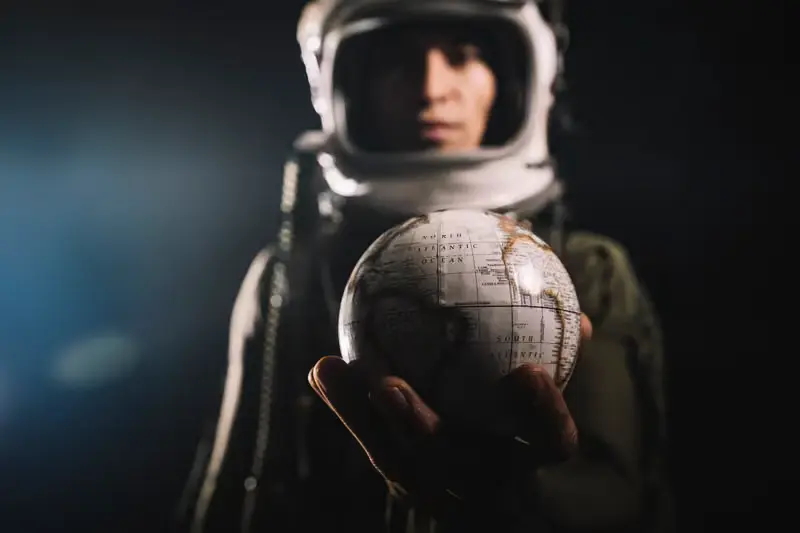
Space is often viewed as an empty region beyond Earth’s atmosphere. In reality, it is a complex environment influenced by radiation, solar activity, magnetic fields, charged particles, and human activities. These conditions affect satellites, spacecraft, astronauts, and other orbital infrastructure. As space exploration expands, understanding environmental risks has become essential for protecting missions and maintaining reliable space operations.
The growing number of commercial satellites, scientific missions, and government launches has introduced additional challenges. Spacecraft must operate in conditions that can change rapidly. Solar storms can disrupt communication systems, radiation can damage electronic components, and orbital debris can cause serious physical damage. These challenges make space environment safety factors an important consideration in modern aerospace engineering.
Orbital safety depends on understanding both natural and human-made threats. It also requires reliable monitoring systems, resilient spacecraft designs, and international cooperation. By combining these approaches, space organizations can reduce mission risks and support more sustainable activities beyond Earth.
1. Defining the Space Environment Beyond Earth’s Atmosphere
The space environment includes the physical conditions, particles, radiation, and gravitational influences that exist beyond Earth’s atmosphere. It is not completely empty. Different regions contain charged particles, magnetic fields, radiation sources, and objects moving through orbital paths.
Conditions vary according to altitude and location. Low Earth orbit extends from approximately 160 to 2,000 kilometers above Earth’s surface. It contains many Earth observation satellites, crewed spacecraft, and communication constellations. Medium Earth orbit hosts important navigation satellites, while geostationary orbit provides positions that allow satellites to remain above approximately the same point on Earth’s equator.
Each region creates different engineering requirements. Low Earth orbit experiences measurable atmospheric drag, which gradually changes satellite trajectories. Higher orbital regions face different radiation conditions and long-term exposure challenges.
Space also differs from Earth’s surface because spacecraft experience an almost complete vacuum. They cannot rely on ordinary air-based cooling or atmospheric protection. Their materials must withstand extreme temperature changes, radiation exposure, and mechanical stress.
Understanding these conditions helps engineers select suitable materials, calculate orbital trajectories, and develop reliable spacecraft systems. It also allows mission planners to identify environmental risks before launching expensive equipment.
2. Natural Forces That Influence Orbital Conditions
Natural space phenomena can affect spacecraft even when no human-made object is nearby. Solar activity, radiation, cosmic particles, and micrometeoroids create hazards that require continuous monitoring.
These threats are not equally distributed or predictable. Some remain relatively stable, while others can change rapidly. Understanding their behavior helps operators prepare for environmental disturbances.
Solar Activity and Space Weather Disturbances
The Sun continuously releases energy and charged particles into space. Solar flares and coronal mass ejections are two important forms of solar activity that can influence Earth’s surrounding environment.
Solar flares release intense bursts of electromagnetic radiation. Depending on their strength, they can affect radio communications and increase radiation exposure for spacecraft. Coronal mass ejections release large quantities of magnetized plasma. When directed toward Earth, they can interact with its magnetic field and produce geomagnetic storms.
These disturbances may affect satellite electronics, navigation accuracy, and communication networks. They can also increase atmospheric density in low Earth orbit, creating additional drag on satellites.
Space weather forecasting helps operators prepare for these events. Satellite teams can adjust operating procedures, protect sensitive instruments, and postpone certain activities when necessary.
Radiation, Micrometeoroids, and Cosmic Particles
Radiation is another major environmental challenge. Spacecraft encounter energetic particles from the Sun, cosmic rays originating outside the solar system, and trapped particles within Earth’s radiation belts.
These particles can damage electronic circuits, degrade solar panels, and cause unexpected system errors. Long-duration missions require particular attention because cumulative exposure can gradually reduce component reliability.
Micrometeoroids create a different type of threat. These naturally occurring particles move at high speeds and can strike spacecraft surfaces. Even small impacts may damage external equipment or protective materials.
Engineers use shielding, specialized materials, and careful component placement to reduce these risks. Radiation-hardened electronics are particularly valuable for missions operating in high-radiation environments.
3. Human Activities That Introduce Additional Orbital Risks
Human activity is changing Earth’s orbital environment. Governments, research institutions, and private companies are launching increasingly sophisticated spacecraft. Satellite networks now support communication, navigation, scientific observation, and commercial services.
This expansion creates important benefits, but it also increases pressure on shared orbital regions. More satellites mean more potential close approaches, greater coordination requirements, and increased demand for reliable tracking information.
Orbital debris is one of the most visible human-made hazards. It includes inactive satellites, discarded rocket stages, detached components, and fragments created by collisions. Because objects move at high orbital velocities, even small pieces can damage operational spacecraft.
Radio-frequency interference is another concern. Satellites depend on specific communication frequencies to exchange information with ground stations and other systems. Poor coordination or overlapping transmissions can reduce signal quality and affect service reliability.
Military and commercial activities introduce additional operational complexity. Different organizations may operate spacecraft with different technical capabilities and information-sharing policies. This makes coordinated traffic management more difficult.
Responsible mission planning can reduce these risks. Operators should consider orbital congestion, communication requirements, disposal procedures, and potential interactions with other spacecraft before launching a mission.
4. How Orbital Conditions Affect Satellite and Spacecraft Performance
Environmental exposure influences spacecraft throughout their operational lifetimes. Even well-designed satellites experience gradual changes caused by temperature variations, radiation, atmospheric drag, and material degradation.
Temperature management is particularly important. Spacecraft move between sunlight and shadow, creating significant thermal variations. Materials expand and contract as temperatures change. Repeated cycles can weaken structural components, damage connections, and affect sensitive instruments.
Radiation can also reduce electronic reliability. Energetic particles may create temporary errors or permanent damage in semiconductor components. Solar panels gradually lose efficiency after prolonged exposure, which can reduce available electrical power.
Atmospheric drag affects satellites operating in low Earth orbit. Although the atmosphere is extremely thin at these altitudes, it still produces resistance. Solar activity can increase atmospheric density and make drag stronger. Satellites may then lose altitude faster than expected.
These effects influence mission planning and operating costs. A satellite experiencing greater drag may require additional propulsion to maintain its orbit. Radiation-related failures may demand complex recovery procedures. Thermal problems can reduce instrument accuracy.
Engineers should therefore establish environmental performance limits during spacecraft development. Reliability models, accelerated testing, and regular monitoring can help identify potential problems before they threaten mission success.
5. Essential Technologies for Monitoring and Predicting Space Hazards
Space safety depends on accurate environmental information. Monitoring technologies help organizations observe natural disturbances, track orbital objects, and predict conditions that could affect spacecraft.
Ground-based radar systems and optical telescopes monitor satellites and debris. Radar can detect and track many objects in low Earth orbit, while optical systems observe objects through reflected sunlight. These measurements help maintain orbital catalogs and identify potential collision risks.
Predictive models combine tracking information with mathematical calculations to estimate future orbital positions. The accuracy of these predictions depends on sensor quality, object identification, and the frequency of updated observations.
Space Weather Monitoring and Forecasting Systems
Space weather monitoring uses satellites, solar observatories, and ground-based instruments to study solar activity and changes in Earth’s magnetic environment.
Observatories such as NASA’s Solar Dynamics Observatory provide valuable information about solar behavior. Spacecraft positioned to monitor solar wind conditions can also provide early warnings of disturbances approaching Earth.
Forecasting systems help operators assess potential impacts. For example, satellite teams may adjust instrument settings or place sensitive equipment into protective operating modes when radiation conditions become dangerous.
However, forecasting remains challenging. Solar events can develop rapidly, and their effects depend on direction, intensity, and interaction with Earth’s magnetic field. Operators should therefore combine forecasts with established emergency procedures rather than relying on predictions alone.
Orbital Tracking and Collision Risk Assessment
Orbital tracking systems provide information about the position and movement of objects in space. Operators use this information to identify close approaches and evaluate collision probabilities.
Artificial intelligence can support this process by analyzing large volumes of tracking data. Algorithms can identify patterns, prioritize potential threats, and assist with maneuver planning.
However, automated systems require reliable input data. Incorrect object identification or outdated measurements can lead to inaccurate predictions. Human oversight remains important when evaluating high-risk situations.
Improved information sharing between satellite operators can also strengthen collision prevention. Common data standards and faster communication channels would make it easier to coordinate avoidance maneuvers.
6. Engineering Strategies That Improve Orbital Safety
Spacecraft must be designed to withstand environmental hazards rather than relying entirely on external monitoring. Engineering decisions made during early development can significantly influence mission reliability.
Radiation-hardened electronics are one important solution. These components are designed to tolerate higher radiation exposure and reduce the probability of electronic failures. Engineers can also introduce error-correction systems and redundant circuits to maintain critical functions.
Thermal protection is equally important. Multilayer insulation, heat pipes, radiators, and carefully selected materials help maintain stable operating temperatures. These systems prevent sensitive equipment from experiencing damaging temperature fluctuations.
Physical shielding protects spacecraft against certain particles and small debris impacts. Whipple shields, for example, use spaced protective layers to break apart incoming particles and reduce the energy reaching internal structures.
Redundancy provides another layer of protection. Critical communication, navigation, and power systems can include backup components. If one unit fails, another may maintain essential operations.
Environmental testing should take place before launch. Thermal vacuum chambers simulate space conditions, while vibration tests examine how spacecraft respond to launch forces. Radiation testing can help identify electronic weaknesses.
Simulation is also valuable. Engineers can model solar disturbances, collision scenarios, thermal changes, and equipment failures. These tests support better design decisions and help mission teams develop practical emergency procedures.
7. International Cooperation and Standards for Safer Space Operations
Orbital safety cannot be managed by individual countries alone. Spacecraft operated by different organizations share the same orbital environment. A collision or uncontrolled reentry can affect multiple operators and create risks beyond national borders.
International organizations have developed guidelines to encourage responsible space activities. The United Nations Committee on the Peaceful Uses of Outer Space provides a framework for discussing space sustainability and debris mitigation. The Inter-Agency Space Debris Coordination Committee also develops technical recommendations for reducing orbital debris.
These guidelines address issues such as limiting debris generation, disposing of spacecraft responsibly, and improving mission planning. However, implementation differs between countries and commercial operators.
Regulatory systems must address this gap. Launch licensing, satellite registration, disposal requirements, and operational reporting can encourage more responsible behavior. Governments should also promote transparent communication between satellite operators.
Information sharing is especially important during potential collision events. If operators cannot access reliable orbital information or communicate quickly, avoiding dangerous encounters becomes more difficult.
Commercial space companies should treat compliance as part of their operational strategy. Strong safety procedures can protect equipment, reduce insurance risks, and improve confidence among customers and investors.
8. The Future of Orbital Safety in an Increasingly Active Space Industry
The space industry is likely to become more active as satellite constellations, commercial missions, and deep-space exploration continue expanding. This growth will require more advanced methods of environmental monitoring and orbital coordination.
Autonomous spacecraft could play an important role. Intelligent systems may eventually assess collision risks, adjust trajectories, and respond to certain environmental disturbances with limited human intervention. However, reliable decision-making and safeguards will remain essential.
Advanced sensors may also improve space weather monitoring and debris detection. More accurate measurements could support earlier warnings and better mission planning.
Satellite servicing offers another opportunity. Refueling, repairing, and upgrading spacecraft could extend operational lifetimes and reduce the need for replacement launches. Debris removal technologies may also help clear selected high-risk objects from crowded orbital regions.
Future progress will depend on combining technological innovation with responsible policies. Expanding space activities should not compromise the long-term usability of orbital regions. Environmental risk assessments, transparent data sharing, and sustainable spacecraft design must remain central to future missions.
Conclusion
The space environment is shaped by natural forces and human activities, both of which influence orbital safety. Solar storms, radiation, micrometeoroids, atmospheric drag, and orbital debris can affect spacecraft performance and mission reliability. Managing these threats requires accurate monitoring, predictive technologies, resilient engineering, and responsible operational practices. International cooperation is equally important because orbital regions are shared by governments, research institutions, and commercial operators. By understanding key space environment safety factors and integrating preventive measures into mission planning, the aerospace industry can reduce operational risks and protect valuable infrastructure. A safer orbital environment will support reliable satellite services, scientific progress, and sustainable space exploration for generations to come.